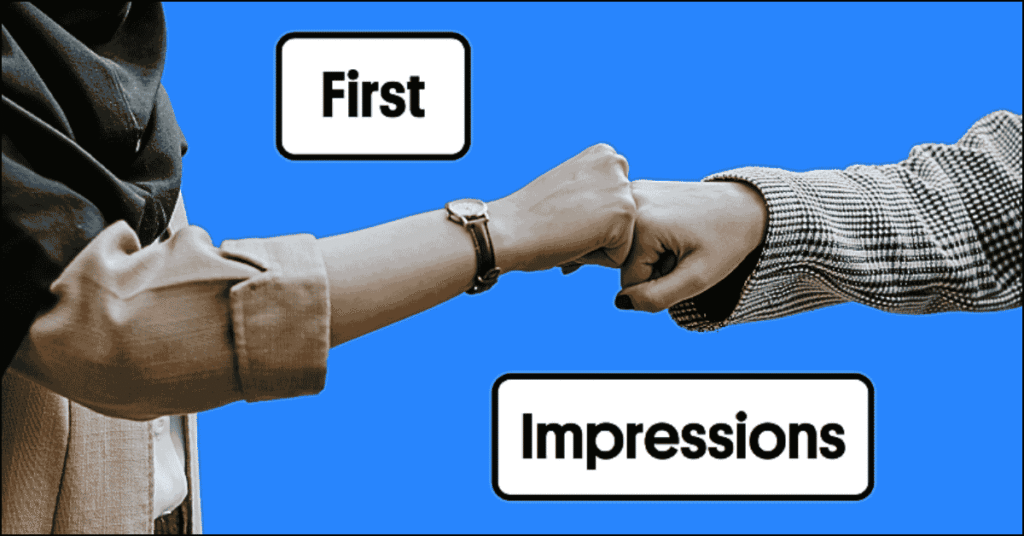
First impressions form quickly—often within seconds of meeting someone or encountering something new—and they can have a lasting impact on how we think, feel, and behave. Even when we know first impressions can be inaccurate, they continue to strongly influence decisions in social, professional, and everyday situations. This tendency is deeply rooted in human psychology and brain function.
The Speed of the Human Brain
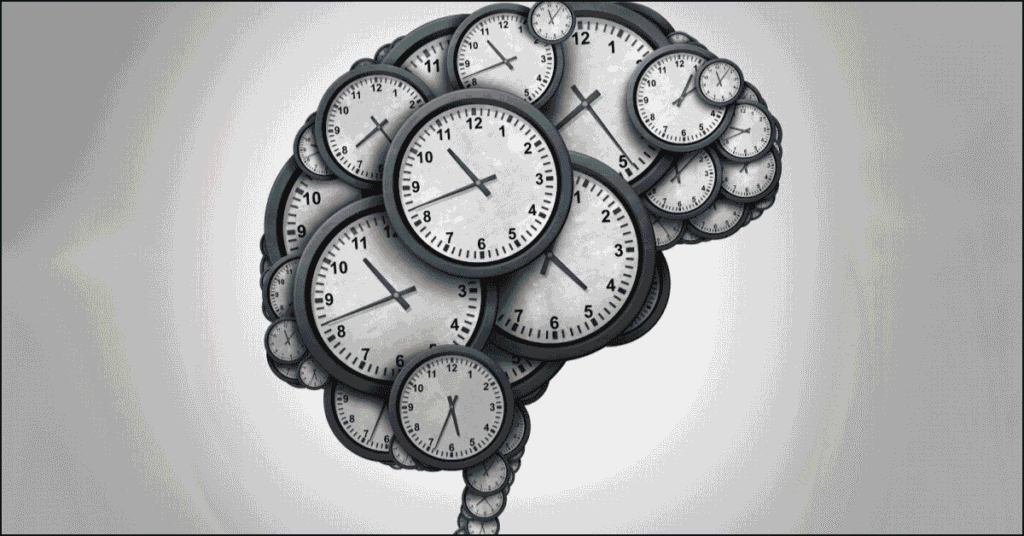
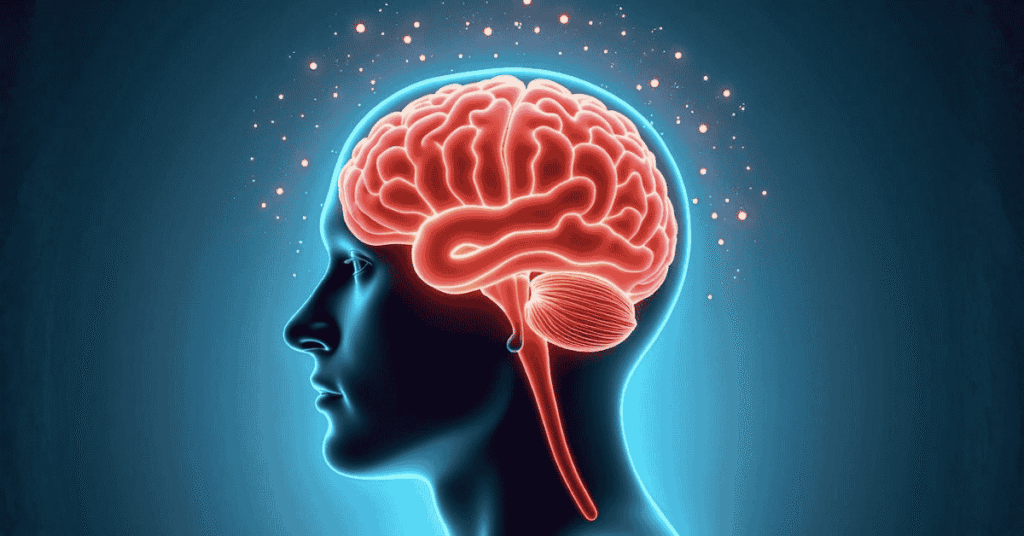
The brain is designed to make rapid judgments. When encountering a new person or situation, it immediately scans for cues related to safety, trust, and relevance. Facial expressions, posture, tone of voice, clothing, and context are processed almost instantly.
This rapid evaluation once served a survival purpose. Early humans needed to quickly assess whether someone was friend or foe. Taking too long to decide could be dangerous. As a result, the brain evolved to form quick assessments using limited information.
Thin-Slicing and Snap Judgments
Psychologists refer to this process as thin-slicing—the brain’s ability to draw conclusions from very small amounts of data. While thin-slicing can sometimes be surprisingly accurate, it often relies on incomplete or superficial information.
Once the brain creates an initial narrative, it tends to stick with it. Later information is often filtered through that first judgment rather than evaluated objectively.
Cognitive Biases That Reinforce First Impressions
Several well-known cognitive biases make first impressions especially powerful:
- Halo effect: A single positive trait (such as attractiveness or confidence) leads us to assume other positive qualities.
- Horn effect: A single negative trait causes us to assume other negative characteristics.
- Confirmation bias: We pay more attention to information that supports our initial impression and ignore evidence that contradicts it.
- Anchoring bias: The first piece of information we receive becomes a reference point for all future judgments.
These biases help the brain process information quickly but reduce accuracy and flexibility.
Emotional Impact and Memory Encoding
First impressions are often emotionally charged. Emotion strengthens memory formation, which means initial encounters are more likely to be remembered clearly and vividly. Because the brain prioritizes emotionally significant information, first impressions are encoded more deeply than later, more neutral experiences.
This strong memory encoding makes first impressions harder to revise, even when new evidence emerges.
Social Efficiency and Mental Shortcuts
Human beings interact with many people every day. Evaluating everyone from scratch would be mentally exhausting. First impressions act as mental shortcuts, allowing the brain to categorize people quickly and conserve energy.
While efficient, this shortcut comes at a cost. It can oversimplify complex individuals and lead to unfair assumptions or misjudgments.
The Role of Appearance and Context
Visual cues play a large role in shaping first impressions. Clothing, grooming, facial expressions, and body language strongly influence how someone is perceived. Context also matters—meeting someone in a professional setting versus a casual environment can dramatically change the impression formed.
These judgments often occur automatically, before conscious reasoning has time to intervene.
Why First Impressions Are Hard to Change
Once an initial belief is formed, changing it requires mental effort. The brain prefers consistency and coherence. Admitting a first impression was wrong creates cognitive discomfort, so the mind often resists updating its beliefs.
Additionally, social narratives tend to reinforce early impressions. Others’ opinions, labels, or reputations can lock in perceptions before personal experience has a chance to override them.
Can We Reduce the Influence of First Impressions?
While first impressions are unavoidable, their influence can be reduced by:
- Slowing down judgments and seeking additional information
- Actively questioning initial assumptions
- Focusing on behavior over appearance
- Allowing multiple interactions before forming conclusions
- Being aware of personal biases
Awareness does not eliminate first impressions, but it helps prevent them from becoming permanent or unfair judgments.
Conclusion
Humans are easily influenced by first impressions because the brain prioritizes speed, efficiency, and emotional significance. These rapid judgments once supported survival and still help manage social complexity today. However, understanding how and why first impressions form allows us to approach people and situations with greater openness, fairness, and accuracy—moving beyond snap judgments toward more thoughtful understanding.